
Technologies of the Future Emerging at Teknopark Istanbul
A Deep technology’s production hub, Teknopark Istanbul, brings together a vast innovation ecosystem spanning multiple sectors-particularly the defence industry-under a single roof. With over 10,000 R&D engineers and advanced engineering capabilities, Teknopark Istanbul is shaping the technology of the future.
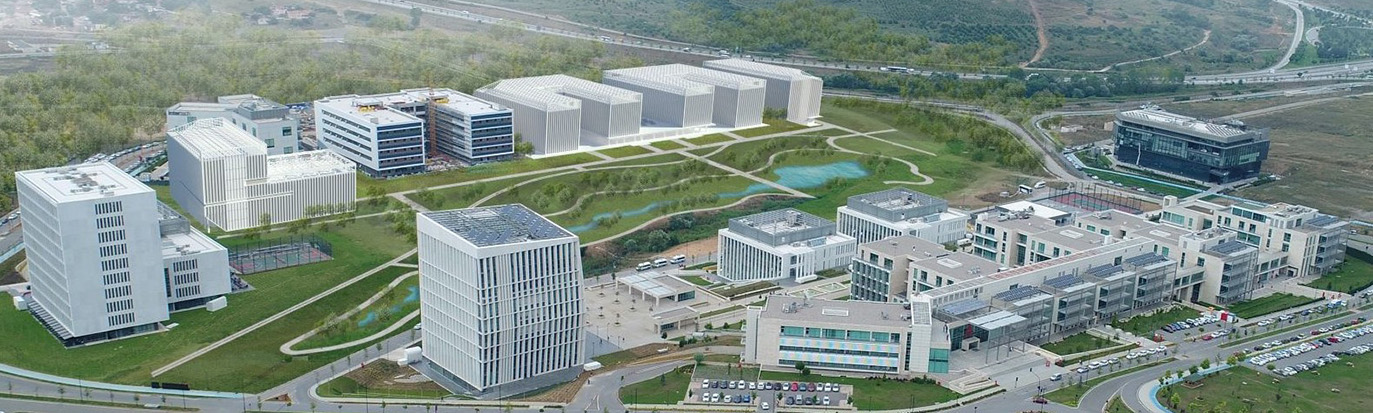
STRENGTHENING year by year in line with Türkiye’s growing technological ambitions, Teknopark Istanbul stands out with its more than 10,000 R&D engineers, advanced engineering capabilities, and thousands of high-tech companies. The following companies made significant strides last year by designing the future within this ecosystem, which is open to global collaborations and local production.
AUTOMATIC TARGETING OF MORTARS
Hyperitem develops tripod, stabilization, and automatic leveling technologies for the defence industry, offering solutions such as electro-optical systems, radars, border surveillance cameras, and high-precision, vibration-free positioning solutions for heavy weapon platforms.
One of Hyperitem’s flagship projects, the Hiza Automatic Mortar Modernization System, aligns mortars to an accurate firing position within seconds by measuring their inclination and orientation. This reduces operator errors, shortens preparation time, and achieves standardized firing accuracy. Future versions of the system aim to feature an autonomous structure capable of learning different terrains and recoil conditions with the support of machine learning. Hyperitem also plans to extend its defence industry engineering expertise into the space sector in the long term.
SMART MANAGEMENT OF SOLAR POWER PLANTS
Solar8 Energy and Advanced Technology takes a novel approach to energy management with its local, AI-enabled solutions, making existing energy infrastructures more efficient, observable, and sustainable.
The platform developed at Teknopark Istanbul focuses on building a predictive, rather than reactive, operational model for solar power plants. Solar8’s indigenous technology integrates site equipment, cloud-based software, and AI algorithms into a comprehensive energy management platform. On-site control boards analyze performance deviations, system behavior, and generation data to project maintenance needs and potential failures. Unlike traditional monitoring systems, this approach enables predictive maintenance and intelligent decision-making.
LIGHTENING VEHICLES AND REDUCING COSTS
VSS Technology accelerates the automotive industry’s electrification transformation with integrated solutions, from vehicle control software to battery systems, modular electrification kits for heavy commercial vehicles, and digital twin infrastructure.
The company operates in four main areas: critical vehicle control software (VCU, BMS, HCU), battery systems for ESS and micro-vehicles, modular electrification kits for commercial vehicles, and engineering systems. Its patented battery and power system reduces vehicle weight, decreases BOM costs, and shortens the installation process, delivering significant production advantages. Coupled with control software managing torque, energy, thermal control, regenerative braking, and ADAS functions, the digital twin infrastructure enables early failure detection and predictive maintenance.
SILENT POWER NANO UAVs
Uludoğan Defence Industries Inc. has drawn attention in both defence and civilian sectors with its nano-class unmanned aerial vehicle, NanoAlp.
With its portable size, silent flight capability, and AI-enabled control systems, NanoAlp provides reconnaissance and surveillance in areas inaccessible to larger UAVs, such as caves, enclosed spaces, forests, and border zones. Despite being only-25 cm, it carries high-resolution electro-optical and thermal cameras for low-light imaging and long-range, secure data transmission. Its biomimetic design allows near-silent flight, providing a significant operational advantage. AI and machine learning software enable image processing, target tracking, and autonomous mission execution.
Beyond military applications, NanoAlp has strong potential in disaster response, search and rescue, border security, and critical infrastructure monitoring. The company has received presale and collaboration requests from Asia, the Middle East, and Europe.
REDUCING THE INDUSTRY’S CARBON FOOTPRINT
Helios is a climate technology venture developing next-generation carbon capture solutions to reduce industry’s carbon footprint. Focusing on “hard-to-abate” sectors such as cement, steel, aluminum, and maritime, Helios aims to offer globally scalable, cost-efficient solutions.
Its technology relies on Metal-Organic Frameworks (MOFs)-advanced materials with high surface areas and tunable structures capable of capturing CO₂ directly from flue gas. Compared to conventional amine-based systems, MOF-based solutions consume less energy, withstand harsh industrial conditions, and reduce operational costs. Helios currently generates revenue and tests its technology by supplying materials to research institutions, with pilot industrial applications planned next. Computational chemistry and AI-based modeling enable MOFs to be customized for specific industrial flue gas conditions.
DIGITIZING THE PEN-PAPER HABIT
XNote, developed by Kodion Innovation, brings the traditional pen-and-paper experience to the digital world. The system, comprising a smart pen and specialized notebook, instantly digitizes handwriting without disrupting the note-taking habit.
AI integration allows notes to be searched, summarized, and synced with various applications. XNote is currently used in over 60 countries. The platform addresses the challenge of transferring notes to digital formats-photographing notes proved inadequate. XNote, supported by a smartphone and AI software, not only captures handwriting but converts it to text using OCR and large language models, summarizes content, creates tasks and events, and integrates with calendars. Supporting over 50 languages, it even allows users to “chat” with their notes. Following global interest via Kickstarter, XNote is particularly popular in the U.S., Europe, and Asia.
SPEED-FOCUSED COMPOSITE PRODUCTION
Rising production demands in aerospace and defence make speed and efficiency critical in advanced composites. CEF Advanced Composites and Materials addresses this, focusing on thermoplastic composite production.
Founded in 2023 from R&D and prototyping work at Sabancı University’s Composite Technologies Excellence Center, CEF has collaborated with global companies such as TAI and Boeing to build its technical infrastructure. Today, CEF produces both thermoset and thermoplastic composites, with a strategic focus on developing thermoplastic materials and components. By applying digital twin and process-modeling approaches, CEF aims to accelerate R&D and production while reducing trial-and-error, improving efficiency through simulation-driven identification of critical production parameters.